

Blogs
Red, Blue, & Golden King Crab: B2B Guide for Importers and Distributors
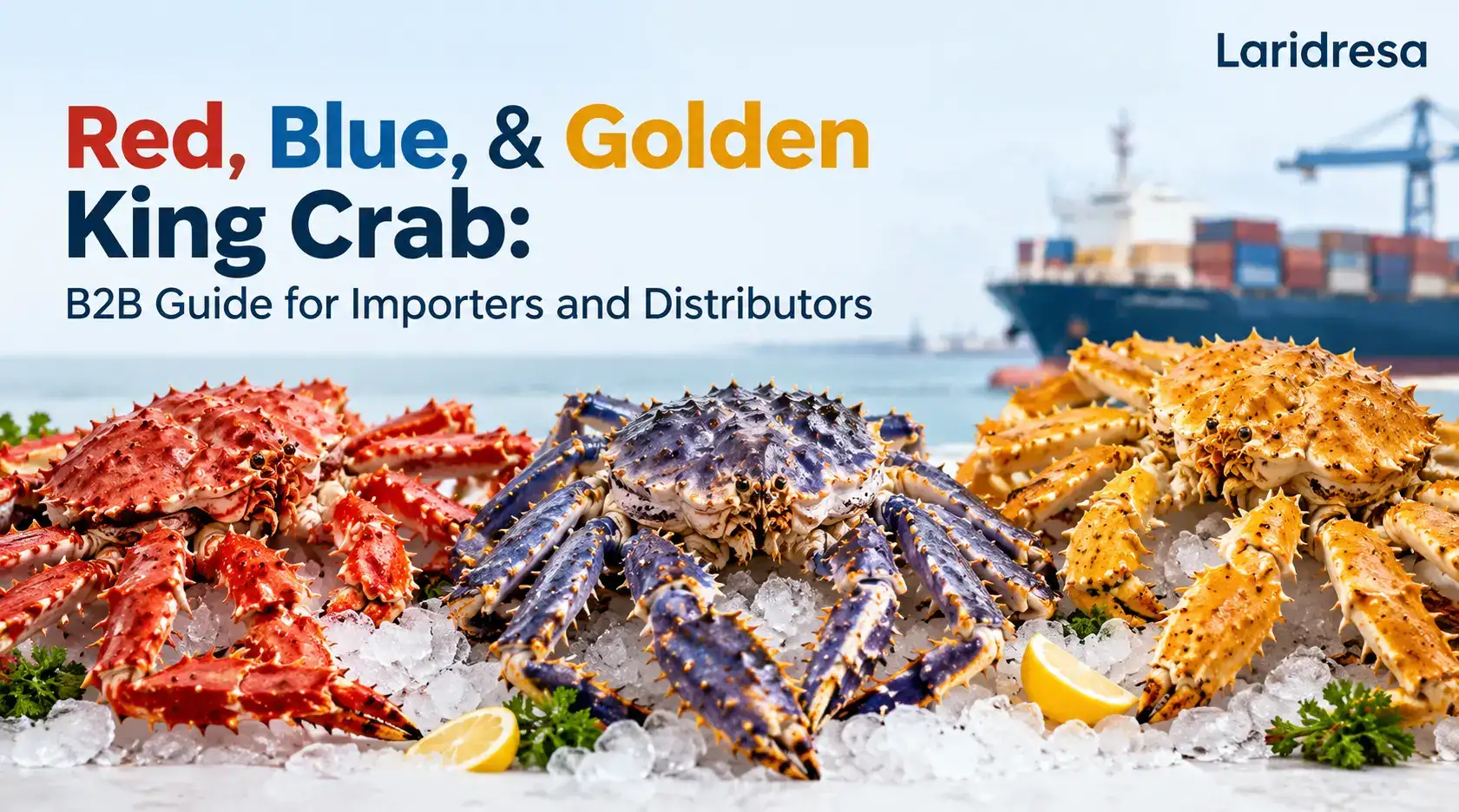
Red, blue, and golden king crab are widely traded seafood products used by wholesalers, importers, distributors, retailers, restaurants, hotels, and foodservice businesses. Each type has different characteristics related to appearance, size, meat, availability, and commercial supply. For businesses purchasing seafood in larger quantities, understanding these differences can make product selection and supplier communication easier.
At Laridresa, Commercial buyers should also look beyond the crab species when sourcing seafood. Product form, size, grade, packaging, storage conditions, certifications, shipping requirements, minimum order quantity, and total import cost can all affect a purchase decision. The same sourcing process can also be applied when buying other fish and seafood categories for wholesale or distribution.
Red, Blue, & Golden King Crab: Understanding the Main Differences
Red, blue, and golden king crab are different types of king crab that can be supplied to international seafood markets. While they share some similarities, their appearance, size, availability, and commercial specifications can vary. Understanding these differences helps importers and distributors communicate their requirements more clearly when requesting quotations from seafood suppliers.
Red King Crab
Red king crab is one of the most recognized king crab products in commercial seafood markets. It has a reddish shell and is commonly associated with large legs and substantial edible meat. Depending on the supplier and market, it can be available as whole crab, crab clusters, legs, claws, or other processed forms. For B2B buyers, red king crab can be considered for restaurants, hotels, seafood wholesalers, retail stores, and foodservice businesses that require premium seafood products.
Buyers should confirm the available size ranges, product grade, processing method, packaging, origin, and quantity before ordering. The final product specifications can differ between suppliers, so buyers should request a current specification sheet instead of relying only on the general product name.
Blue King Crab
Blue king crab has a blue to blue-brown appearance when raw, although its color can change after cooking. Like other king crab products, it can be supplied in different commercial formats depending on the processing facility and supplier. Importers and distributors should compare blue king crab based on size, weight, product form, meat characteristics, processing specifications, packaging, and availability. These factors can be more important for commercial purchasing than shell color alone. For businesses serving restaurants or seafood retailers, product presentation and size consistency may also be important. Buyers should communicate their preferred specifications clearly before requesting a quotation.
Golden King Crab
Golden king crab generally has a lighter golden or orange shell appearance. It is another commercial option for buyers looking to source king crab for wholesale, foodservice, restaurant, and retail markets. Golden king crab may be available in whole, section, leg, cluster, or other processed forms. The available sizes and specifications depend on the supplier, source, season, and processing operation. For importers, it is important to confirm the exact species, product form, size, weight, packaging, origin, and storage requirements. This information allows buyers to compare golden king crab with other seafood products according to their customers' needs.
Red, Blue, and Golden King Crab Comparison
| Factor | Red King Crab | Blue King Crab | Golden King Crab |
| General appearance | Reddish shell | Blue to blue-brown shell | Golden or orange shell |
| Common product forms | Whole, legs, clusters, claws | Whole, legs, clusters, claws | Whole, legs, clusters, claws |
| Commercial buyers | Importers, wholesalers, restaurants, retailers | Importers, wholesalers, foodservice businesses | Importers, wholesalers, restaurants, retailers |
| Important specifications | Size, grade, weight, product form | Size, grade, weight, product form | Size, grade, weight, product form |
| Packaging | Supplier dependent | Supplier dependent | Supplier dependent |
| Storage | Usually controlled cold storage | Usually controlled cold storage | Usually controlled cold storage |
Actual product specifications can vary according to the supplier, source, season, processing facility, and destination market. Buyers should always confirm current specifications before placing an order.
What B2B Buyers Should Check When Sourcing King Crab
Buying seafood for commercial purposes requires more information than simply asking for a product price. Importers and distributors should provide clear requirements to suppliers so that quotations from different companies can be compared properly.
Species and Product Specifications
The first step is to confirm the exact king crab species and product format. Buyers should communicate the required size, weight range, grade, quantity, packaging, processing method, and other specifications. For example, a restaurant distributor may need crab legs in a particular size range, while a seafood wholesaler may prefer whole frozen crab or clusters. A retailer may require smaller packaged portions with specific labeling. Clear specifications reduce the risk of receiving a product that does not match the buyer's customer requirements. Buyers can also request product photographs, specification sheets, packing details, available grades, and sample information before confirming a large order.
Fresh, Frozen, and Processed King Crab
King crab can be supplied in different forms according to the supplier and destination market. Common options may include whole crab, legs, claws, clusters, sections, and other processed products. Frozen seafood is especially important for international trade because temperature control is required during storage and transportation. Buyers should ask about freezing methods, storage temperatures, shelf life, packaging, and cold chain arrangements. The same considerations apply when purchasing other fish products. Whether a buyer is sourcing crab, shrimp, salmon, tuna, squid, or other seafood, the product format should match the buyer's storage facilities and customer demand.
Quality and Food Safety Requirements
Food safety is an important part of commercial seafood sourcing. Buyers should check the supplier's processing procedures, product handling, traceability system, packaging, labeling, and relevant food safety documentation. Import regulations can vary between countries. A buyer importing seafood into one market may need different documentation from a buyer importing into another market. Before confirming an order, importers should check the requirements of their destination country and make sure the supplier can provide the required documents.
How to Evaluate King Crab Suppliers
Finding a suitable supplier requires more than comparing product prices. Importers and distributors should evaluate whether a supplier can provide consistent quality, suitable quantities, proper documentation, and reliable logistics.
Supplier Experience and Production Capability
Buyers should ask suppliers about their experience with international seafood orders, processing capabilities, export markets, available products, and production capacity. If a distributor needs regular shipments, it is important to understand whether the supplier can maintain consistent product specifications and supply quantities over time. Buyers can also ask about lead times, seasonal availability, packaging options, cold storage, and their ability to handle repeat orders. A supplier with a broad seafood product range can also be useful for buyers who want to source multiple fish and seafood categories from one supply channel.
Certifications and Documentation
• Seafood importers should ask which certifications and export documents are available for the selected product.
• Depending on the country, product, and buyer requirements, documentation may include health certificates, certificates of origin, inspection documents, product specifications, traceability information, and other regulatory paperwork.
• Buyers should confirm the exact requirements with the relevant authorities or customs professionals in their destination market.
MOQ, Packaging, and Private Label Options
• Minimum order quantity is another important factor for B2B buyers. A large seafood distributor may purchase significantly higher quantities than a small retailer or restaurant supplier.
• Before ordering, buyers should ask about MOQ, carton size, net weight, gross weight, packaging material, pallet configuration, labeling, and storage instructions.
• Some seafood suppliers may also provide customized packaging or private label options. This can be useful for retailers and distributors that sell seafood under their own brand.
Pricing and Supply Considerations for Commercial Buyers
Price is naturally an important factor for commercial buyers, but the lowest quotation does not always represent the complete cost of sourcing seafood.
What Affects King Crab Pricing?
King crab pricing can be affected by species, size, grade, product form, availability, season, processing, packaging, transportation, and market conditions. For example, two suppliers may offer different prices for products that appear similar but have different size ranges, meat specifications, packaging, or processing methods. This is why buyers should request detailed quotations that clearly explain the product specifications and what is included in the quoted price. When comparing suppliers, buyers should compare equivalent products rather than comparing only the price per kilogram.
Understanding the Total Import Cost
The product price is only one part of the total cost for an international seafood buyer. Additional costs may include freight, insurance, customs duties, taxes, port handling, inspection fees, cold storage, inland transportation, and other logistics expenses. For frozen seafood, cold chain management is particularly important. Buyers should discuss transportation conditions, storage temperature, delivery arrangements, and expected transit time with the supplier. Calculating the estimated landed cost before ordering can help importers understand the actual cost of bringing seafood into their market.
Supply Planning for Distributors
Seafood distributors need to plan inventory according to customer demand, storage capacity, lead times, and expected sales. Before placing an order, buyers should consider how much product they can store and how quickly they expect to sell it. Large orders may offer commercial advantages, but they also require sufficient cold storage and reliable demand. Buyers should also ask suppliers about lead times and seasonal availability so they can plan future orders and avoid unnecessary supply gaps.
Choosing the Right King Crab for Your Market
The suitable king crab product can depend on the buyer's customers and sales channel. Restaurants and hotels may have specific requirements for crab size, presentation, meat quantity, and product format. Retailers may focus more on packaging, labeling, portion sizes, and shelf presentation. Seafood wholesalers may prioritize consistent supply, volume, product specifications, and overall landed cost. Importers should first understand what their customers actually require before selecting a product. It is also useful to consider other fish product categories. A seafood distributor may purchase king crab together with shrimp, salmon, tuna, squid, lobster, fish fillets, or other seafood products. Working with suppliers that can provide multiple product categories may simplify sourcing and logistics.
Questions to Ask a King Crab Supplier Before Ordering
Before placing a commercial seafood order, buyers should ask suppliers clear questions about the product and supply terms:
1. Which king crab species do you currently supply?
2. What sizes and grades are available?
3. Which product forms can you provide?
4. What is the minimum order quantity?
5. What is the product origin?
6. Where is the product processed and packed?
7. What certifications and export documents are available?
8. What packaging options do you offer?
9. What are the storage temperature requirements?
10. What is the expected shelf life?
Asking these questions before ordering helps buyers understand the supplier's capabilities and compare offers more accurately.
Sourcing Other Fish and Seafood Products
Businesses that purchase king crab may also have regular demand for other seafood categories. Instead of sourcing each product separately without a clear purchasing process, importers and distributors can use the same evaluation method across their seafood portfolio. For shrimp, buyers may need to check size count, processing type, shell condition, freezing method, packaging, and origin. For fish products, important specifications can include species, whole or fillet format, size, weight, freshness or freezing condition, and packaging.
For squid, lobster, salmon, tuna, and other seafood products, buyers should also consider processing, cold chain requirements, certifications, MOQ, shipping, and destination market regulations. This approach can help commercial buyers create clear purchasing specifications and communicate their requirements more effectively with seafood suppliers.
Conclusion
Red, blue, and golden king crab offer different options for importers, distributors, wholesalers, retailers, restaurants, and foodservice businesses. Understanding the differences between these products can help buyers communicate their requirements and compare suitable supply options. However, species alone should not determine a commercial seafood purchase. Buyers should also evaluate size, grade, product form, processing, quality, packaging, documentation, storage, MOQ, pricing, shipping, and supplier capabilities.
For businesses purchasing different fish and seafood categories, the same sourcing process can be used across products. Clear specifications, accurate quotations, suitable documentation, and reliable supply arrangements can help buyers build a more organized seafood purchasing process and develop long-term supplier relationships.
Frequently Asked Questions (FAQ’s)
1) What is the difference between red, blue, and golden king crab?
Red, blue, and golden king crab differ mainly in shell appearance, size, meat characteristics, availability, and commercial specifications. Buyers should compare the exact product size, grade, processing method, and product form offered by each supplier before placing an order.
2) What should importers check before buying king crab?
Importers should check the crab species, size, grade, product form, origin, packaging, MOQ, storage requirements, certifications, export documents, shelf life, lead time, and shipping arrangements. These details help buyers compare supplier quotations accurately.
3) What king crab products are available for wholesale buyers?
Wholesale buyers may be able to source king crab as whole crab, legs, claws, clusters, sections, and other processed formats. Availability depends on the supplier, source, processing facility, and destination market. Buyers should request current product specifications before ordering.
4) How can seafood distributors compare king crab suppliers?
Distributors can compare suppliers based on product specifications, quality standards, available quantities, MOQ, pricing, packaging, certifications, production capacity, lead times, and shipping support. Comparing the complete supply offer is more useful than comparing only the price per kilogram.
5) Can buyers source king crab along with other seafood products?
Yes, many commercial seafood buyers may source king crab together with other fish and seafood categories such as shrimp, salmon, tuna, squid, lobster, and fish fillets. Sourcing multiple products from suitable suppliers can help distributors manage their seafood purchasing requirements more efficiently.
Read blogs like this:
The Incredible Benefits of King Crab Meat
Types of King Crab Around the World
What is a King Crab? Habitat, Types, Diet, Size & Interesting Facts