

Blogs
How to Import Squid Wings: Regulations, Certifications, and Logistics
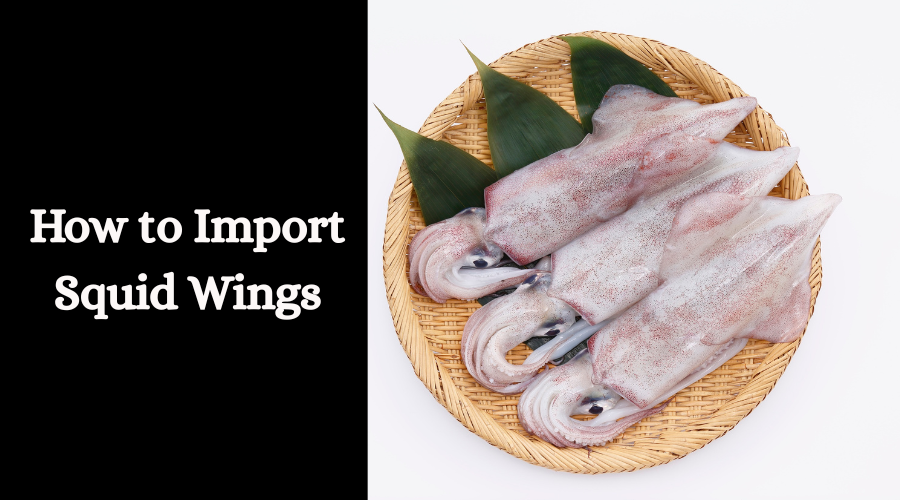
Squid wings are emerging as a favorite seafood product. They are eaten in restaurants, processing plants, and seafood shops worldwide. The trend is that many companies currently prefer to purchase squid wings directly from their country of origin, rather than from local sources. Direct imports will result in improved prices, quality control, and supply-chain management.
Nonetheless, the process of importing seafood is not fast or easy. One must remember about rules and regulations, permits and certificates, and make considerations. Following is a basic description of the key steps.
Understanding the Squid Wings Market
Squid wings or squid fins are the triangular flaps found on the squid's body. They're removed during processing and marketed as a seafood delicacy. Key producers are China, Peru, Indonesia, India, and Argentina. They have extensive squid fisheries and seafood processing plants.
Imports of squid wings are made by seafood merchants, food processors, restaurant operators, and supermarket distributors. The product is typically available in frozen form, individually quick frozen, or in blocks. Your requirements will help you specify what you need to import.
Find Out Your Country's Import Rules
First, determine the policies of importation of frozen seafood into your country. They vary from country to country. Some are straightforward. Some are more complicated, involving several different agencies and paperwork.
In the United States, the Food and Drug Administration and Customs and Border Protection regulate seafood imports. Seafood imports into the European Union must be from facilities listed by the European Commission. In Australia, there are rigorous biosecurity rules administered by the Department of Agriculture. Each market has a list of approved countries and facilities.
Firstly, check whether your country approves squid imports from the exporting country. Not all countries are approved exporters to all countries. Even when the product is okay, the exporting country will lose the cargo if the country is not on the list.
What Certifications Do You Need?
You must have the required certifications to import squid wings. They ensure that the squid wings are safe, legally caught, and meet processing standards.
Health Certificate
The government authority of the exporting country issues a health certificate. It states that the squid wings have been examined, meet health standards, and are safe to eat. This certificate is generally required for all imports. It can't be cleared through customs without one.
Catch Certificate
Catch certification is required in many countries to demonstrate that the squid was caught legally and not from illegal, unreported, or unregulated fishing. The European Union has a rigorous catch certification program for seafood imports. The United States has a comparable scheme, the Seafood Import Monitoring Program (SIMP), which requires paper-trail documentation of certain seafood from harvest to market.
Cold Chain Certification
Squid wings are frozen; hence, the cold chain is something to consider as the wings are transported to their destination. Some markets require proof that the product was delivered at the proper transportation temperature. This guarantees both the safety and quality of food.
Is Halal or Other Religious Certification Required?
This will depend on who you are selling to. When you are providing halal-certified businesses, the facility in which they are produced must be halal-certified by a recognized halal authority.
Working with a Reliable Exporter
The exporter is also as important as the regulations. An exporter can clearly understand and process the documents. They know which documents your importing country needs and can complete them without errors, which can cause a delay.
Ask prospective exporters for their facility number. Ask if their facility is on your country's list. Ask for copies of former health and catch certificates to see their records. A reputable seafood exporter will readily give this information. If you can, visit the plant or book an inspection company to verify that processing meets the claimed standards. This ensures you do not receive inferior products or shipments that have been incorrectly processed and shipped.
How Does Cold Chain Logistics Work for Frozen Squid?
The entire cold chain for frozen squid wings should be kept at minus 18 degrees Celsius or below all the way through to your warehouse. It will consist of refrigerated transport between the processing plant and the port, then a refrigerated sea box, and then refrigerated transport between the port and your door. To do this properly, hire a freight agent who handles the transportation of frozen seafood.
Customs Documentation
A specific list of documents is required to clear imported seafood through customs. This includes a commercial invoice, packing list, bill of lading or airway bill, health certificate, catch certificate, and any other required certificate for your country.
Is it Profitable to Import Squid Wings for Small Business?
Yes, but the landed cost needs to be carefully calculated before import pricing is compared to locally sourced squid wings to account for all costs. The most cost-effective imports are those that can fill a container load. Smaller consolidated loads are possible but attract extra costs, making them less profitable.
Conclusion
When importing squid wings, it's all about planning, partnering, and documentation. Know the import regulations and restrictions in your country. Only buy from approved exporters whose factories are registered for export. Employ a reliable freight forwarder to maintain the cold chain and a local customs broker for importation. If you get the logistics right and the documentation right, squid wings will be a profitable addition to your seafood business.