

Blogs
Frozen Squid vs Fresh Squid: Key Differences for Seafood Buyers
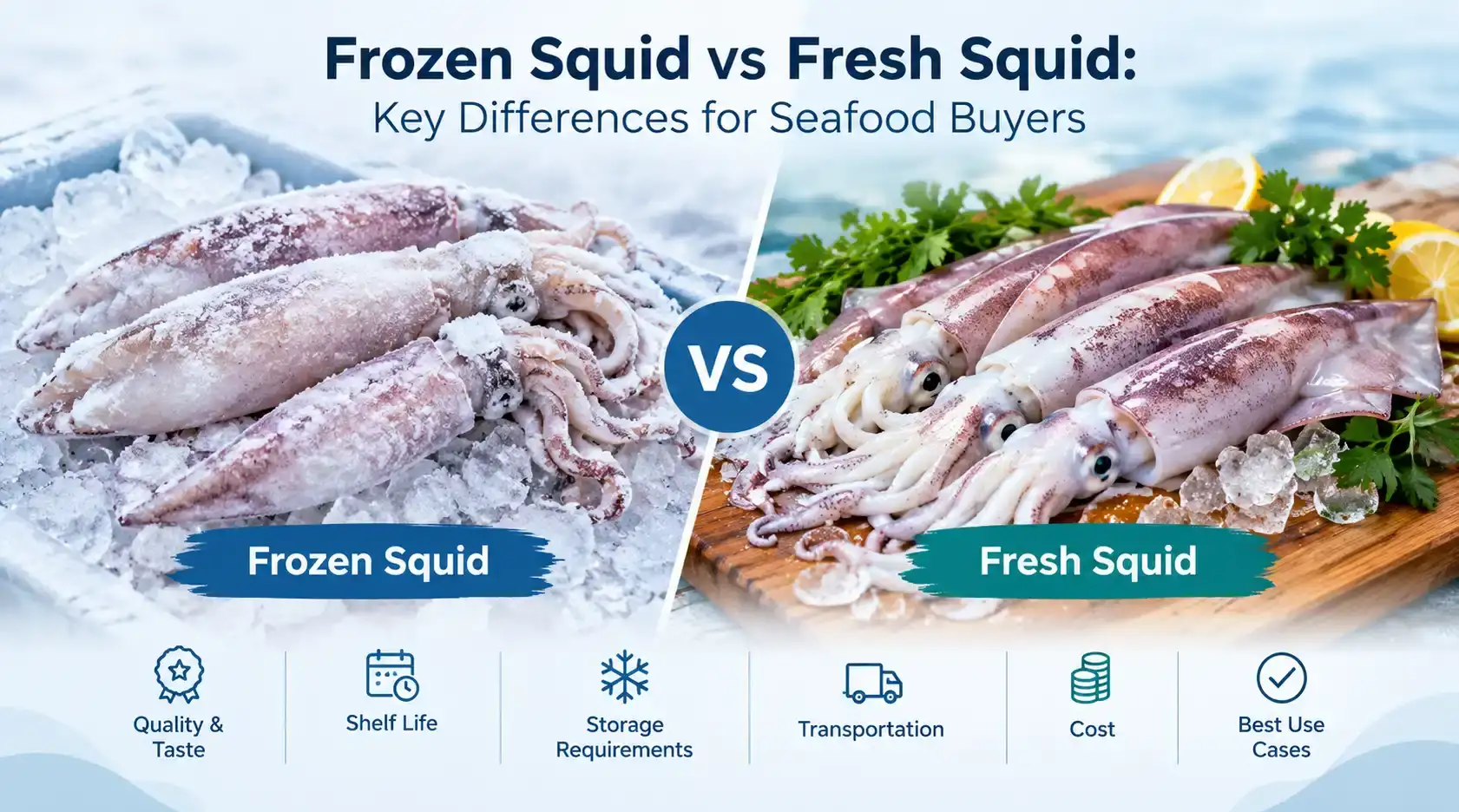
Choosing the right seafood products is an important decision for importers, wholesalers, distributors, retailers, and food service businesses. Squid is widely used in restaurants, seafood markets, food processing facilities, and international seafood trade. However, buyers often need to decide whether fresh squid or frozen squid is the better option for their business. This decision can affect product quality, storage requirements, transportation costs, shelf life, and customer satisfaction. Understanding the differences between these two options helps buyers make informed purchasing decisions.
When comparing frozen squid vs. fresh squid, it is important to look beyond appearance and purchase price. Fresh squid may be suitable for businesses that need quick delivery and immediate preparation, while frozen squid can offer greater flexibility for inventory management and international shipping. Both options can provide good quality when handled properly, but their suitability depends on the intended use, supply chain, and customer requirements.
What Is Fresh Squid?
Fresh squid is seafood that has been recently caught and kept under appropriate chilled conditions before reaching the buyer. After harvesting, squid needs careful handling to maintain its quality, texture, and natural characteristics. Depending on the supplier and local market, fresh squid may be delivered whole or prepared through basic cleaning and processing. The time between catching and delivery is an important factor because squid is a perishable product that can deteriorate quickly when temperature control and hygiene practices are not maintained.
The quality of fresh squid depends on several factors, including the species, harvesting conditions, handling procedures, transportation time, and storage temperature. Proper chilling helps slow down the growth of microorganisms and reduces the risk of quality deterioration. However, refrigeration does not stop spoilage completely, so fresh squid requires an efficient distribution system. Buyers working with fresh seafood should understand how the supplier handles the product from harvesting to delivery and whether the transportation process maintains suitable temperature conditions throughout the journey.
Fresh squid is commonly purchased by restaurants, hotels, seafood markets, and food service companies that prepare seafood for immediate use. These businesses may prefer fresh products because they can purchase quantities according to daily demand and serve customers who specifically request fresh seafood. Local suppliers can also offer flexibility when buyers need different sizes or product formats. However, fresh squid availability may change according to fishing seasons, weather conditions, local catches, and transportation arrangements. Businesses must consider these factors before depending on fresh squid as their main source of supply.
Another important consideration is the distance between the supplier and the final buyer. Fresh squid may be practical when the supplier is located close to the processing facility, restaurant, or seafood market. Laridersa understands the importance of reliable seafood sourcing and proper handling throughout the delivery process. Long-distance transportation requires careful planning because the product must remain properly chilled and reach its destination within a suitable period. Delays can increase costs and create quality risks. For this reason, buyers should evaluate delivery schedules, handling procedures, and the supplier's ability to maintain consistent product quality before purchasing fresh squid in commercial quantities.
What Is Frozen Squid?
Frozen squid is squid that has been processed and preserved through freezing to slow down deterioration and maintain product quality during storage and transportation. Depending on the supplier, squid may be frozen shortly after harvesting or after initial processing. The product can be supplied in several forms, including whole squid, cleaned squid, squid tubes, rings, and tentacles. These formats allow buyers to select products according to their business requirements, food preparation methods, and customer preferences.
Freezing helps preserve squid by reducing the activity of microorganisms and slowing down the natural processes responsible for quality deterioration. However, freezing does not make poor-quality squid acceptable, nor does it replace proper hygiene and handling practices. The original quality of the squid, freezing speed, packaging, and storage conditions all influence the final product. Buyers should therefore check how the supplier processes and freezes squid rather than assuming that every frozen product offers the same quality and performance.
There are different freezing methods used in the seafood industry. Individual quick freezing, commonly called IQF, freezes individual pieces separately. This allows buyers to remove the quantity they need without thawing an entire package. IQF squid can be useful for restaurants, distributors, and food processing companies that require portion control and flexible inventory management. Block freezing, on the other hand, freezes squid in larger blocks. This format may suit processors and businesses that purchase larger quantities and have their own facilities for thawing and further processing.
Read this blog: How to Import Squid Wings: Regulations, Certifications, and Logistics
Frozen squid is widely used in international seafood trade because it can be stored and transported over longer periods than fresh squid when the required frozen conditions are maintained. Importers can purchase larger shipments, arrange transportation across long distances, and manage inventory according to customer demand. Frozen products are also available in standardized sizes and packaging formats, which can make stock planning easier. However, buyers still need suitable freezer capacity, temperature monitoring, and reliable transportation arrangements to protect product quality from dispatch to final delivery.
Frozen Squid vs Fresh Squid: Key Differences
The main difference between fresh and frozen squid is the way each product is preserved and managed throughout the supply chain. Fresh squid generally requires prompt delivery and continuous refrigeration, while frozen squid requires storage and transportation at the specified frozen temperature. These differences affect purchasing schedules, inventory planning, distribution costs, and the types of businesses each product can serve. Seafood buyers should evaluate these factors according to their operational needs instead of choosing one option based only on its name or initial price.
Quality is another important factor when comparing fresh squid vs frozen squid. Fresh squid that has been handled correctly can provide excellent flavor and texture. However, squid that spends too much time in unsuitable conditions may lose quality before reaching the buyer. Frozen squid can also retain good quality when it is frozen properly, packaged correctly, and stored without temperature fluctuations. Freezing may affect texture depending on the method and handling conditions, but a well-managed frozen product can be a suitable option for many commercial applications.
Shelf life and storage requirements create another major difference. Fresh squid has a shorter usable storage period and must be managed carefully to avoid spoilage. Buyers generally need faster stock rotation and reliable delivery schedules. Frozen squid offers greater storage flexibility when kept at the supplier's specified temperature, making it easier to maintain inventory for future orders. Nevertheless, frozen squid is not suitable for indefinite storage. Its quality can gradually decline, and the recommended storage period depends on the species, processing method, packaging, and temperature conditions.
Availability can also influence purchasing decisions. Fresh squid supply may vary because of seasonal fishing patterns, weather, catch volumes, and local market conditions. Businesses that rely entirely on fresh squid may need alternative suppliers or products when supply becomes limited. Frozen squid can help reduce some of these challenges because buyers can arrange shipments in advance and maintain stock for planned production or sales. This does not guarantee unlimited availability, as frozen squid also depends on harvest volumes, processing capacity, and market demand.
Transportation requirements differ according to the product format and delivery distance. Fresh squid usually needs a well-managed chilled supply chain and timely delivery to the destination. Frozen squid requires suitable frozen storage and transportation systems, including temperature monitoring during shipping. For international buyers, frozen squid can be more practical for long-distance transportation because it provides a longer storage window. However, the total cost must include freight, cold storage, customs procedures, handling, and other charges rather than relying on the quoted product price alone.
Taste, Texture, Quality, and Nutritional Value
Taste is one of the main reasons seafood businesses compare fresh and frozen squid. Fresh squid that has been recently caught and properly handled can offer a clean seafood flavor and a firm, tender texture when cooked correctly. However, freshness depends on the product's actual condition rather than simply the label used by the seller. Poor handling, delayed chilling, and unsuitable storage can affect both flavor and texture. Buyers should therefore assess the supplier's handling procedures and product quality before making a decision.
Read this blog: Exploring the Perfect Giant Squid in Culinary Worlds
Frozen squid can also retain good flavor when the original product is of suitable quality and freezing is carried out correctly. Modern freezing methods can help preserve many of the characteristics buyers expect from squid. However, freezing and thawing may influence moisture retention and texture. Slow freezing, temperature fluctuations, poor packaging, and repeated thawing and refreezing can increase the risk of quality loss. For this reason, buyers should pay attention to the freezing method, storage history, and thawing instructions provided by the supplier.
Texture is particularly important for restaurants and food processors because it influences the final eating experience. Squid can become tough or rubbery when overcooked, regardless of whether it was purchased fresh or frozen. Product quality, squid species, size, preparation methods, and cooking time all contribute to the result. Frozen squid may release some moisture during thawing, so businesses should follow appropriate thawing procedures and evaluate the usable yield before making large purchasing commitments. Testing samples can help buyers understand how the product performs in their intended recipes or processing operations.
Nutritional value is another consideration for seafood buyers serving health-conscious customers. Squid provides protein and contains several nutrients, including vitamin B12, selenium, and other minerals. Freezing generally helps preserve much of the product's nutritional content when suitable processing and storage conditions are maintained. Differences in nutritional value may result from the product itself, added ingredients, processing methods, storage conditions, and cooking techniques. Buyers should review product specifications and ingredient information when purchasing processed squid rather than assuming all products have identical nutritional characteristics.
For commercial buyers, quality evaluation should include more than taste and texture. The product's odor after thawing, appearance, packaging condition, size consistency, and documented storage history can help identify possible concerns. Strong unpleasant odors, unusual discoloration, damaged packaging, or evidence of temperature abuse may indicate that further investigation is needed. No single visual or sensory check can guarantee safety, so buyers should also review supplier documentation, traceability information, and applicable food safety controls. These checks are especially important when purchasing large quantities for resale or food production.
Storage, Shelf Life, and Transportation Requirements
Proper storage is essential for maintaining squid quality, whether the product is fresh or frozen. Fresh squid should be refrigerated promptly and kept under appropriate chilled conditions throughout storage and transportation. Businesses should follow applicable food safety requirements and supplier recommendations for temperature control and storage duration. Because fresh squid is highly perishable, buyers need an organized receiving process that checks delivery conditions, records relevant information, and moves the product into suitable storage without unnecessary delays. Good inventory management also helps reduce waste and protect product quality.
Frozen squid requires a reliable freezer system that maintains the temperature specified by the supplier and applicable food safety standards. Frequent temperature fluctuations can affect product quality and increase the risk of partial thawing. Businesses should use appropriate packaging, monitor storage conditions, and rotate stock according to product dates and the supplier's recommended shelf life. It is also important to keep frozen squid separate from products that could cause contamination and to ensure that storage facilities have enough capacity for the planned purchasing volume.
Transportation is another area where buyers should pay close attention. Fresh squid generally requires refrigerated transportation with a delivery schedule designed to limit the time between dispatch and receipt. Frozen squid needs an appropriate frozen transport system, which may include refrigerated containers for international shipments. Buyers should confirm that the transport provider understands the product's temperature requirements and can provide relevant monitoring records when needed. For imported seafood, delays at ports or during customs clearance should also be considered when planning shipment schedules.
Thawing procedures are important because the quality of frozen squid can be affected after it leaves the freezer. Buyers should follow the supplier's recommended thawing instructions and applicable food safety guidance. Uncontrolled thawing at unsuitable temperatures can increase safety risks and reduce product quality. Businesses should avoid refreezing squid that has been thawed unless a validated procedure and applicable food safety requirements specifically permit the intended process. Planning the quantity needed for each production period can reduce unnecessary thawing and help maintain consistent product quality.
Read this blog: What Are the Nutritional Benefits of Seafood? Key Benefits, Vitamins, and Protein Value
Cost Comparison: Which Option Is More Economical?
The cost of fresh squid depends on several factors, including catch volumes, seasonality, species, size, local demand, handling requirements, and distance from the supplier. When catches are limited or demand increases, prices may rise. Fresh squid can also involve additional costs related to rapid transportation, frequent purchasing, chilled storage, and potential product waste. For restaurants and seafood retailers, the final cost depends not only on the purchase price but also on how efficiently the product can be used before its quality deteriorates.
Frozen squid prices are influenced by the species, size grade, processing method, freezing technique, packaging, glazing percentage, and storage requirements. International freight and cold storage charges may also affect the final landed cost. Some products are sold whole, while others are cleaned or cut into specific formats that require additional processing. Buyers should compare equivalent product specifications when reviewing quotations. A lower price per kilogram may not provide better value if the product has a different size grade, higher glazing percentage, lower usable yield, or less suitable packaging.
For importers and wholesalers, calculating the total cost of purchasing squid in bulk is particularly important. The calculation should include the product price, transportation, insurance where applicable, customs duties, taxes, port charges, storage, and local distribution costs. Buyers should also consider processing losses and the amount of usable squid available after thawing and preparation. Comparing suppliers using these factors can provide a more realistic understanding of profitability and help businesses avoid unexpected expenses after the shipment arrives.
Fresh squid may be economical for businesses located near reliable suppliers that can deliver small quantities quickly. Frozen squid may offer better operational value for companies that need larger shipments, longer storage periods, or consistent product availability. Neither option is always cheaper because the result depends on the purchasing market and supply chain. Buyers should compare quotations from several suppliers, confirm the specifications carefully, and calculate the cost per usable kilogram before selecting a product for regular commercial purchasing.
Which Squid Is Better for Restaurants, Wholesalers, and Importers?
Restaurants and hotels often choose between fresh and frozen squid according to their menu, customer expectations, kitchen facilities, and delivery arrangements. A restaurant with reliable local access to fresh seafood may prefer fresh squid for dishes prepared shortly after delivery. Another restaurant may choose frozen squid because it can maintain stock more easily and order according to expected demand. Frozen products in portion-friendly formats can also help kitchens manage preparation time and reduce the need for extensive cleaning before cooking.
Seafood wholesalers and distributors often need products that can be stored and supplied to customers across different locations. Frozen squid can support this business model by providing more flexibility in shipment scheduling and inventory management. Wholesalers can purchase according to anticipated demand, store products in suitable facilities, and distribute them to restaurants, retailers, and processors. However, the business must have reliable freezer capacity and a suitable distribution network. Fresh squid may still be valuable for wholesalers serving customers who specifically request fresh seafood and can accept frequent deliveries.
Food processing companies may prefer frozen squid because standardized formats can help support production planning. Cleaned squid, tubes, rings, and tentacles can reduce preparation work and make it easier to estimate the quantity required for particular products. The right format depends on the processing equipment, recipe, production volume, and customer specifications. Buyers should confirm whether the squid is supplied with skin, cleaned, trimmed, or prepared in another way. These details can affect labor costs, processing yield, and the consistency of the finished product.
International importers need to consider supply availability, shipping distance, documentation, storage facilities, and customer demand. Frozen squid can be practical for international trade because it allows shipments to travel through established frozen supply chains. Nevertheless, importers must verify destination country requirements, product eligibility, health documentation, labeling rules, and applicable customs procedures before placing an order. Fresh squid may be appropriate for some short-distance or specialized supply chains, but its shorter storage window makes careful transport planning particularly important.
Retailers should also consider how their customers prefer to purchase squid. Fresh seafood counters may attract shoppers looking for products to prepare immediately, while packaged frozen squid can appeal to customers who want convenient storage and flexible meal planning. Retailers need to consider package size, labeling, storage capacity, expected turnover, and the requirements of their local market. A combination of fresh and frozen products may serve different customer groups, provided the business can manage the storage and handling requirements of each format properly.
How to Choose a Reliable Squid Supplier for Bulk Orders
Selecting a reliable squid supplier is one of the most important steps for businesses purchasing seafood commercially. Buyers should begin by reviewing the supplier's product range, processing capabilities, sourcing information, and experience serving similar markets. A supplier should be able to explain the available squid species, product formats, size grades, packaging options, and storage requirements. Clear communication helps buyers understand whether the supplier can meet their specifications and maintain consistent supply over time. It is also useful to discuss production lead times and the supplier's ability to handle repeat orders.
Product specifications should be confirmed before a purchase order is finalized. Buyers need to understand whether the quoted squid is whole, cleaned, peeled, cut, or supplied in another format. The specification should also identify the size grade, net weight, glazing percentage where applicable, packaging type, storage temperature, and declared shelf life. These details help prevent misunderstandings between the supplier and buyer. If the product is intended for resale or processing, the buyer should ensure that the specifications match the needs of the final customer and applicable market requirements.
Quality assurance and traceability are also important when purchasing frozen or fresh squid. Importers should request relevant product documentation, processing details, origin information, and food safety records appropriate to the transaction. Depending on the destination market, additional certificates or approvals may be required. Buyers should verify these requirements before shipment rather than assuming that documents accepted in one country will be sufficient in another. A supplier that understands export documentation and communicates clearly can help reduce avoidable delays and procurement problems.
Before placing a large order, buyers should consider requesting samples or arranging an appropriate product evaluation. Samples can help verify appearance, texture, size consistency, packaging, and performance after preparation. For frozen squid, the buyer can assess the thawed product and estimate its usable yield under normal operating conditions. Sample testing does not replace formal food safety verification, but it can provide useful information about whether the product meets the buyer's commercial expectations. Buyers should also agree on specifications, acceptance criteria, delivery terms, and procedures for addressing discrepancies before confirming a shipment.
Finally, price should be considered alongside reliability and service. A supplier offering the lowest quotation may not provide the best overall value if delivery schedules are inconsistent or product specifications are unclear. Buyers should compare the total landed cost, payment terms, minimum order quantity, communication quality, and ability to supply repeat orders. Building a dependable relationship with a qualified supplier can make purchasing easier and support more predictable business operations. This is particularly important for wholesalers and distributors whose customers depend on consistent product availability and agreed quality standards.
Frozen Squid vs Fresh Squid: Which Should You Choose?
The choice between frozen squid and fresh squid depends on the requirements of the business, the intended customer, and the available supply chain. Fresh squid can be a suitable option for restaurants, seafood markets, and food service businesses that have reliable local suppliers and can use the product quickly. When it is handled properly, fresh squid can offer excellent quality and meet the expectations of customers who prefer fresh seafood. However, buyers must manage refrigeration, delivery timing, and inventory carefully to reduce waste and maintain product condition.
Frozen squid may be a better fit for importers, wholesalers, distributors, and food processors that require flexible purchasing schedules and reliable inventory management. Proper freezing can help preserve product quality and support longer storage when the required conditions are maintained. Frozen squid is also available in different processing formats, making it easier for buyers to select products according to their operational requirements. However, businesses must account for freezer capacity, frozen transportation, packaging specifications, and the cost of maintaining the cold chain.
Before making a final decision, seafood buyers should compare the actual product quality, total purchasing cost, supplier reliability, storage capacity, and customer demand. It is also important to confirm the product's origin, processing method, size grade, packaging, and applicable documentation. Testing samples and reviewing supplier specifications can help reduce purchasing risks. Rather than assuming that fresh squid is always better or frozen squid is always more economical, buyers should evaluate the complete supply chain and select the option that offers the best value for their particular business.
For companies purchasing squid in bulk, a well-planned sourcing strategy can support product consistency, reduce unnecessary costs, and improve customer satisfaction. Businesses may also choose to stock both fresh and frozen squid if their customers have different requirements and their facilities can support both products safely. By understanding the differences between these options, buyers can make better purchasing decisions and develop a more reliable seafood supply process.
Frequently Asked Questions (FAQ's)
Is Frozen Squid as Good as Fresh Squid?
Frozen squid can offer quality comparable to fresh squid when it comes from a suitable source and is processed, frozen, packaged, and stored correctly.
Does Frozen Squid Lose Its Nutritional Value?
Freezing generally helps preserve much of squid's nutritional value by slowing down the processes that cause deterioration.
How Long Can Frozen Squid Be Stored?
The storage life of frozen squid depends on the species, initial quality, processing method, packaging, and temperature maintained during storage.
What Should Importers Check Before Buying Frozen Squid in Bulk?
Importers should confirm the squid species, country of origin, size grade, processing format, freezing method, glazing percentage, net weight, packaging, and storage requirements.
Conclusion
Understanding the differences between frozen squid and fresh squid helps seafood buyers select products that match their business needs. Fresh squid can be suitable for immediate preparation and local distribution, while frozen squid can offer greater flexibility for storage, wholesale purchasing, food processing, and international trade. Both options require appropriate handling, temperature control, and reliable sourcing to maintain product quality. The best choice depends on the intended application, customer expectations, storage facilities, delivery distance, and total purchasing cost.
For importers, wholesalers, and distributors, selecting a dependable supplier is just as important as choosing between fresh and frozen products. Buyers should confirm product specifications, evaluate quality, review relevant documentation, and understand the transportation requirements before placing an order. Comparing samples and calculating the total landed cost can provide a clearer picture of the value offered by each supplier.
By considering these factors, seafood businesses can improve purchasing decisions, manage inventory more effectively, and supply products that meet customer expectations. Whether you choose fresh squid for local demand or frozen squid for bulk distribution, a careful sourcing process can support consistent quality and more efficient seafood operations.