

Blogs
What is a King Crab? Habitat, Types, Diet, Size & Interesting Facts
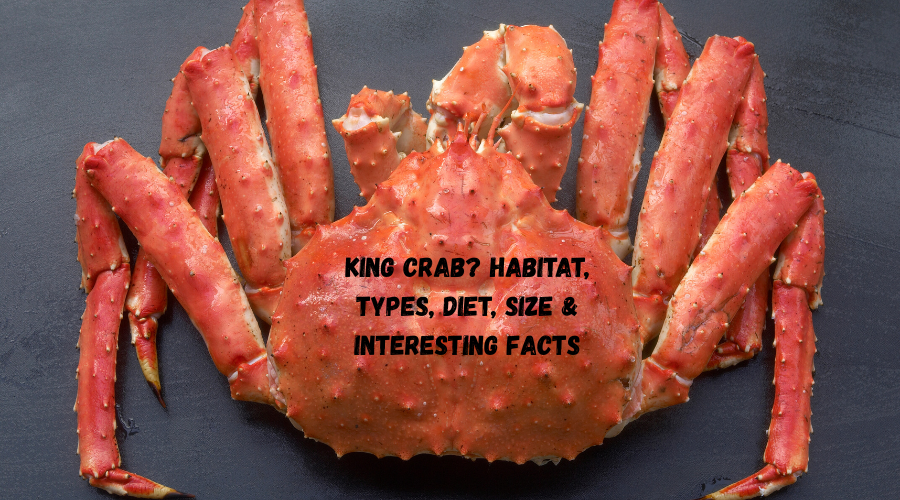
King crabs stand out as both fascinating and valuable ocean creatures. Their huge size, long legs, and tasty meat make them popular in seafood markets worldwide. However, there’s much more to them than just being a delicacy, they have unique biology, live in deep-sea habitats, and show remarkable survival skills.
This guide covers what king crabs are, where they live, what they eat, the different types, their size, scientific facts, and how their meat compares to others. You’ll also find some lesser-known facts that make them special.
What Are King Crabs?
King crabs are big marine crustaceans with long legs and spiny shells. Even though they’re called crabs, scientists don’t always consider them “true crabs.”
They get the name “king crab” because they are larger, have stronger claws, and are more dominant than other crab species.
|
Category |
Details |
|
Definition |
Large marine crustaceans known for their long legs, spiny shells, and high-value meat. |
|
Habitat |
Cold ocean waters, mainly in the North Pacific (Alaska, Russia, Japan). Found on sandy or muddy sea floors. |
|
Main Types |
Red King Crab (largest & most valuable), Blue King Crab, Golden King Crab. |
|
Diet |
Omnivorous scavengers – eat algae, small fish, mollusks, worms, and detritus. |
|
Average Size |
Leg spans up to 5–6 feet (1.5–1.8 meters); weight can exceed 10 kg (22 lbs). |
|
Lifespan |
Typically, 20–30 years depending on species and environment. |
|
Unique Features |
Thick spiny shell, asymmetrical claws (one larger), strong legs for walking on seabed. |
|
Economic Value |
Highly prized seafood, especially Red King Crab; expensive due to harvesting difficulty. |
|
Interesting Fact |
Despite the name, king crabs are more closely related to hermit crabs than true crabs. |
Is a King crab a true crab?
Biologically, king crabs aren’t true crabs. They actually evolved from hermit crab ancestors and developed a crab-like shape over time.
This change happened through a process called carcinization, where different species end up looking like crabs even if they aren’t closely related.
King crabs are known for:
•Their large size and heavy body structure
• Strong, spiny exoskeleton
• Long, thick walking legs
• High commercial value in seafood industry
Where Do King Crabs Live?
King crabs are found in cold ocean waters, mainly in the Northern Hemisphere.
They typically live in:
• The Bering Sea
• North Pacific Ocean
• Waters near Alaska, Russia, and Japan
King crabs like deep, cold, and nutrient-rich waters. These conditions help them survive and find food.
They are often found:
On the ocean floor
• Around rocky or muddy seabeds
• In areas with temperatures just above freezing
King crabs don’t live in shallow water. They do best in deep-sea areas where there are fewer predators.
Ocean Depth and Distribution of King Crabs
King crabs live at varying depths depending on species, but most are found between:
• 90 meters to over 300 meters deep
• Some species can go even deeper during migration or feeding
They are highly adaptive to pressure and cold temperatures, They can handle high pressure and cold temperatures, which makes them well-suited for life in extreme underwater environments.
• Russian Far East seas
• Parts of the Arctic Ocean
What Do King Crabs Eat?
King crabs are opportunistic feeders, meaning they eat whatever is available in their environment.
Their diet includes:
• Small fish and fish parts
• Mollusks like clams and snails
• Worms and marine invertebrates
• Dead organic matter (scavenging behavior)
King crabs help keep the ocean healthy by eating dead material and recycling nutrients from the sea floor.
King crabs use their strong claws to break shells and access food hidden inside.
Types of King Crabs
There are several important species of king crabs, each with unique characteristics:
| Type of King Crab | Key Characteristics |
|---|---|
| Red King Crab | - Largest and most valuable species - Found mainly in Alaska - Known for its sweet, rich meat |
| Golden King Crab | - Smaller than red king crab - Found in deeper waters - Slightly milder taste |
| Blue King Crab | - Rarest commercially harvested species - Found in limited regions - Known for delicate flavor |
| Southern King Crab | - Found in Southern Hemisphere waters - Less common in global markets |
How Big Do King Crabs Get?
King crabs are among the largest crustaceans in the ocean.
They can grow up to:
• 1.5 feet (body width)
• Up to 6–10 feet leg span
• Weight: can exceed 10 kg (22 lbs) in large specimens
The red king crab is usually the biggest species and is often linked with luxury seafood dishes.
Their size helps them:
• Defend against predators
• Travel long distances on the seabed
• Compete for food efficiently
What Do King Crabs Look Like?
King crabs have a distinctive and intimidating appearance.
Key features include:
• Hard, spiny exoskeleton
• Long, thick walking legs
• One larger claw used for defense and feeding
• Asymmetrical body structure
Their bodies are built to survive tough conditions, and their hard shells protect them from predators.
Underwater, king crabs often blend in with rocks or mud, which makes them harder to see.
Are King Crabs True Crabs? (Scientific Fact)
Scientifically, king crabs are considered “false crabs” in evolutionary terms, although they are still classified under the broader crab group.
They belong to the order Decapoda, which includes:
•Crabs
• Lobsters
• Shrimp
King crabs evolved from hermit crab ancestors, meaning they are more closely related to hermit crabs than true crabs.
This shows how well king crabs have adapted to their environment over time.
Meat Quality and Comparison with Other Crabs
King crab meat is highly prized for its:
• Sweet flavor
• Tender texture
•Large chunks of edible meat
Which crab has the most meat?
King crabs are among the top contenders for the highest meat yield per leg, making them extremely valuable in the seafood industry.
Their legs are rich in thick muscle, which is why they are preferred in gourmet dishes worldwide.
Why King Crabs Are So Valuable
King crabs are expensive because:
They are difficult to catch in deep waters
Fishing seasons are limited
They require harsh working conditions to harvest
Demand is high in global seafood markets
Their combination of rarity, size, and taste makes them a premium seafood product.
Conclusion
King crabs are remarkable deep-sea creatures known for their massive size, unique biology, and high-value meat. Found in cold northern oceans, they play an important role in marine ecosystems and are among the most sought-after seafood delicacies worldwide.
Although they are not true crabs in a strict scientific sense, their appearance and behavior closely resemble those of crabs. From their diet of small marine organisms to their impressive leg span and deep-ocean habitat, king crabs stand out as fascinating ocean species. Understanding their types, lifestyles, and distribution helps us appreciate these incredible marine animals more clearly.
FAQs
Is king crab bigger than snow crab?
Yes, king crabs are significantly larger than snow crabs and have thicker, meatier legs.
What is the rarest crab in the world?
Some of the rarest crabs include:
* Blue king crab
* Certain deep-sea crab species found in limited regions
How many species of crabs are there in the world?
There are approximately 6,000+ crab species worldwide, found in oceans, freshwater, and even land environments.
Are king crabs true crabs?
No, they are not true crabs biologically, but they look similar due to evolutionary adaptation.
Which crab has more meat overall?
King crabs generally provide the highest meat yield per leg compared to most other crab species.
Related Articles
https://www.laridersa.com/blogs/types-of-king-crab-around-the-world